Posted on

Spectral Evolution | Rafael Toral EN

Spectral Evolution | Rafael Toral

To discover Rafael Toral’s career is to delve into 35 years of music, composition and interpretation in rock, free jazz, electronica and ambient. It’s silence and contemplation, noise, and discomfort. It’s getting to know in depth the paths and routes that sound can take us on.

I came across Rafael’s work in what he calls his Third Phase (from 2017). The album Jupiter and Beyond (with João Pais Filipe) is one of the records I like best from this phase of Toral. As he says on his website, at this stage of his career, this record is rawer and more emotional. And it became clear to me that it was these more emotional records that led me to explore Rafael’s career. I later wrote about two digital releases by Noise Precision Library: Live in Lisbon (with Hilmar Jensson) and Live in Lisbon (with Tatsuya Nakatani and John Edwards). And, in 2023, I wrote about his Space Quartet and the album Last Set.

In Spectral Evolution, we find the destination of this 35-year journey. A return to the electric guitar, a record that leaves open the way for various journeys. Rafael presents his discography, allowing us to listen to his work and understand his path, his rationale of creation, the way Spectral Evolution synthesizes his journey. This latest album is overwhelming.

It’s profound, it crosses the ground with the spiritual and for the first time it didn’t take me to other worlds (mind you, I really enjoy traveling in Toral’s other worlds). It took me on an inner journey, a journey of mine (and indeed his). There must be a rational explanation for Rafael Toral’s acute sensitivity.  With heightened senses, we listen to our inner selves. We relive sorrows, reflect on choices, actions, and decisions. We hear in the distance – from our minds – songs that lulled us in childhood and the fears of those who secretly waited for the night under the bed. We enter the church by our grandmother’s hand and turn our backs on the altar in a thoughtful act of denial. This record is a lesson in psychoanalysis, in deep communion with our place in the world – at least, that’s how it was for me.

It’s a beautiful, pure record. I got on the train not knowing that the forty-seven minute journey would be so intense, with landscapes so green but also so dark. It’s a journey with no return. Once you’ve delved so deeply into Rafael’s work, you’ll never go back to where you started. We recognize his 35-year career in this album. The interconnection between the guitar and the spacey-sounding electronics takes me back to when, a few years ago, I tried to get to know his work more deeply. In fact, what could be considered improbable becomes harmoniously perfect on this record. The journey through his more spacey side, made up of the electronic instruments he has been building, and the classical instruments that are part of our general knowledge.

What Toral proposes to us – or what I understand he proposes to us – is that, at a time when the world is so chaotic and lost, we find our place. Energy channeled into sounds that himself has been discovering and working on for decades. More than a musician, composer or producer, Rafael is an investigator of silence, sound, and its potential.

I’ve already said that this record is beautiful. I don’t think I’ve yet said that it’s hard.

Death is part of the journey. The death of a part of us also happens in this work so that we can then ascend to another dimension.

It took me a long time to write about this record because what it has brought me has moved me deeply. Initially, rather than a review of the album, it was an introspection about my journey with this record. I had to sit down again, find the right path and rewrite. I had never written something so personal that the focus was completely lost on what was intended: the record. And even that was a new and enriching experience. A new listen, a new journey, rewriting without losing any of the experience that these forty-seven minutes are.

Rafael Toral’s musical career is vast, rich, and consistent. I always feel small when I write about him.

I’ve entered parts of myself that I didn’t know, I’ve descended to the depths, rising again between his guitar and his ethereal sounds. This journey is unrepeatable and, without a doubt, it’s an album that covers Toral’s 35 years of creation in an excellent way.

You can read the interview in this link.

Posted on

Interview with Rafael Toral 

Interview with Rafael Toral 

It’s a challenge to interview Rafael Toral. Getting to know his career in depth involves many hours of attentive listening, getting to know his instruments and the musicians with whom he has shared records and stages.

Toral is synonymous of meticulousness, research, and creation. This interview is an overview of his 35 years of creation and research into sound, and we’ll talk about his new album Spectral Evolution, which is a clear reflection of Toral’s entire career.

***

Thank you, Rafael, for accepting this interview.

Thank you, Margarida, for your work and interest.

Congratulations on the new record! Tell me a bit about it and how it reflects your career.

The record first came to me with the image of a garden as a musical metaphor. Just as harmony welcomes the “right” notes into the melody, in a garden there are only the right plants in the right place. So, what I wanted to do was make music equivalent to the weeds that grow wild in the soil, abundant and disordered, using electronic instruments as a source of “chaotic” melodies that spring from a harmonic ground. That first idea was the hardest. It took me a long time to get the electronics to stop “hovering” over the harmony separately, but I eventually managed to “teach” harmony to those little beasts so that the two layers came together. Another root of the record is the fascination with 1930s jazz harmony, almost all the parts are standard forms of old jazz, starting with Changes, whose chords Gershwin wrote in 1930. Other parts are elements made abstract, like the “ii-V-I” cadence, and others.

As I had already observed myself gravitating towards more static music, I “remembered” that I have a whole past with this approach and imagined that I could orchestrate the chords with the guitar sound I discovered in Sound Mind Sound Body in 1987. A lot of my guitar work up until 2003 is evoked on the record, and naturally the electronic “soloists” came straight from Space Program (everything I did between 2004 and 2017). There you go – Space Program was launched in a break with the previous phase, I even had to change the way I thought about music, so this record is about reconciling opposing worlds.

How do you feel about returning to the guitar and using it together with the instruments you made? Can you elaborate a little more on how you thought about composing Spectral Evolution?

Formerly, I always understood the guitar as an object that emits sound, harmonics, resonances, and feedback. I had basic skills as a guitar player, enough to play rock, but I never had the slightest interest in guitar technique or harmonic mechanisms. In fact, I was bored with guitar discourse because you had to interrupt one sound to make another, and playing quickly you couldn’t appreciate any of them. This “return” to the guitar is much more than that, I’m actually starting again. I’ve internalized, from the music I love, that chords are also a sound in themselves. Especially in jazz, which uses complex chords with particular “colors” that end up making sense when inserted into a sequence of their own, they don’t exist separately. So, I surrendered, because I want to use this material. As Miles said to Bill Evans while listening to him play, “there – I want that sound“. That means taking an interest in things I’ve hated all my life: scales, modes, rules. I’m acquiring what I’ve spent my whole life rejecting. I’m just starting out, observing space. I know that it closes easily and only opens with a lot of effort.

The composition of the album took shape when I began to observe certain symmetries in the pieces. I decided to have more static pieces that I called “spaces”, two short and two long. One piece descending and one ascending, etc. This is how I ended up making the composition symmetrical, which progresses in reverse order from the center and ends with a “reprise”, back to the opening theme.

Do you think your experience with alternative rock is audible on this record?

I think so, those formative experiences of youth always end up in the blood, in the DNA.

How? 

It’s revealed in details, or in the attitude towards certain things, or sometimes in a direct reference, for example in the sound of Ascending, where I use a fifth, a typical rock interval with a distorted sound that’s also classic rock. More subtle is the use of some voicings in the orchestration. In jazz, it’s common to omit the fifth from a chord, as it only adds body and doesn’t add anything characteristic to the chord. But in rock the fifth is essential, it’s what makes a “power chord”. That’s why I’ve often chosen ways of orchestrating chords with the fifth above the bass, which gives a delicious, sensory vibe that’s closer to rock. It’s not a deliberate choice, it just sounds better to me, it’s in my blood…

It’s a very strong record emotionally. How did you think about and create the soundscapes?

Well, I actually thought about relations, balances and contrasts. In most cases I tried to respond to the demands of the material itself, to the directions that the music dictated. I’m not very good at creating things from scratch. Whenever I really try to draw a landscape, the material shows discomfort and makes demands. Resisting is pointless, the music is always right. You have to listen to it, it talks to me, always complaining…, but when it finally says “Ah, yes!”, that’s worth everything.

I was still a teenager when I read Kandinsky’s Point, Line, Plane, and in it there was an observation that has always stayed with me: that a straight line is a point in movement, driven by a single force, and that a curved line is the same, but driven by two conflicting forces, and is therefore intrinsically dramatic. I noticed early on that this is also true on sound. You can see it a lot, for example, in Blues bendings. An instrument like the “MS-2” mini-amp in feedback (with which it’s difficult to draw a straight line) doesn’t seem to sound very dramatic in its natural element (free-form, like the Space Quartet), but placed in an assumed relationship with chords and harmonic structures, it easily takes on a very strong emotional expressiveness, sounding as much like a lament as a scream. Then there’s the whole atmosphere of classical harmony, some chords have a poignant expressiveness. To begin with, just look at a basic cadence in jazz and one that is used a lot on the record, the “ii-V-I”. The roman numerals refer to the degrees of a major scale, in which the “ii” is a minor chord, usually associated with a feeling of melancholy or sadness, the “V” is a dominant chord, full of tension, and inclined to reach the “I” which is a major chord, of fullness and rest. The history of music is full of these movements, and on the album the emotions in the chords are felt more intensely because the rhythm is soooo slow.

Is your departure from the city for a life in the countryside reflected in these landscapes? How?

It makes me think… all the music I’ve made has always been very little permeable to information outside the universe of music. It has always been, and I wanted it to be, about nothing, without describing or imitating anything and with no subject other than itself. Curiously, this has been a constant since the beginning. Everything on the album already existed before I left Lisbon, and the “landscapes” have little in the way of landscape in my mind, everything is saturated with formal concerns. It’s that effect that James Turrell used to talk about, that he was interested in the movement of a swan gliding over water, but without seeing its legs paddling underneath… It’s true that some of the denser parts are inspired by the idea of the rainforest, that mass of sound that isn’t governed by an orchestral logic, but by a logic intrinsic to Nature, but that has nothing to do with where I live, in fact, that idea first occurred to me while I was still in Lisbon… Even so, it’s a good moment to remind ourselves that we’re all Nature, we’re not separate from it or anything else. I think being interested in this is at least healthy and at most necessary. It’s true that living in the city doesn’t make this any easier.

Silence – and the investigation of this space – is clear in your discography in the phase you call Space Program. How do you see this silence and space in the new album?

Spectral Evolution already belongs to another paradigm of thought. Silence and space are equivalent in Space Program and are the floor of the time grid in which decisions are made – especially rhythmic ones, about when to make sound. On this record there are segments of phrasing in which these principles are followed (for example, right at the Intro), but in most cases the discursive logic in electronics has become more of Nature, and through multiplicity, many voices simultaneously (this tends towards landscape, then towards rest, then towards silence, but in a radically different way and with a radically different end point). The Space Program focused on human discourse and silence as the white of the paper that allows us to read whatever is written on it. It’s a different kind of space. Spectral Evolution doesn’t conceive of emptiness, it’s full of earth and living matter.

In your 35-year career, you’ve crossed paths and developed work with various musicians. Jim O’Rourke’s label, Moikai, has been without releasing for around 20 years. Tell us a bit about your work with Jim O’Rourke.

Jim has been a dear friend for many years. We’ve only played together a few times. He has a very sharp critical sense and intuition, as well as a degree of knowledge and mastery in almost everything to do with music. I was having serious difficulties with the process of making the record “ignite”, of making it take on an identity and a life of its own, when I decided to send the version I had at the time to Jim, asking him to listen to it and point out criticisms, in the hope that he would help me to unblock and understand things that weren’t working. He replied saying that he really liked it, and that he was thinking of relaunching his label to publish it. I understood that he liked it, after all I was trying to make a masterpiece, but as for the label, I couldn’t take him seriously, I thought it was too far-fetched, I thought there was a side to him that I wouldn’t understand. But as it turns out, he really meant it.

I really like the Noise Precision Library. Can you go into a bit more detail about these digital editions?

Thank you. I started publishing recordings that I thought were interesting, that I could share with anyone who followed me, but that I didn’t think justified the investment in a physical medium or in press coverage. Some old stuff from 4-track tapes, etc. And I also had recordings of collaborations, mostly live and some notable, that I didn’t want to be left in the drawer. It ended up working as a public record of a lot of things I did that never made it onto a record. I ended up making a few editions on CD too, but very few, like Harmonic Series 3 or Under the Sun. At this stage I’ve published very little because I’m still in transition…

Thanks, Rafael.

You can read the record review in this link.

Posted on

Terra Cobre | João Pais Filipe e Marco da Silva Ferreira

Terra Cobre | João Pais Filipe e Marco da Silva Ferreira

The first time I saw João Pais Filipe live was in the Novo Negócio, in a duo with Pedro Melo Alves, on June 15, 2021.

This concert is, to this day (and I believe it will remain so), on my list of the best concerts I have seen. I commented at the time to whoever was with me that I didn’t know what to write other than: “impactful, memorable and that made me sit there, hours on end, watching and listening to the two, in that perfect, harmonious and disruptive dialogue whenever it was necessary”.

Later, in July of that year, I interviewed João Pais Filipe for Covidarte and promised that I would still write about that concert. I didn’t, the timing passed, but what I felt at that concert is still very present in me.

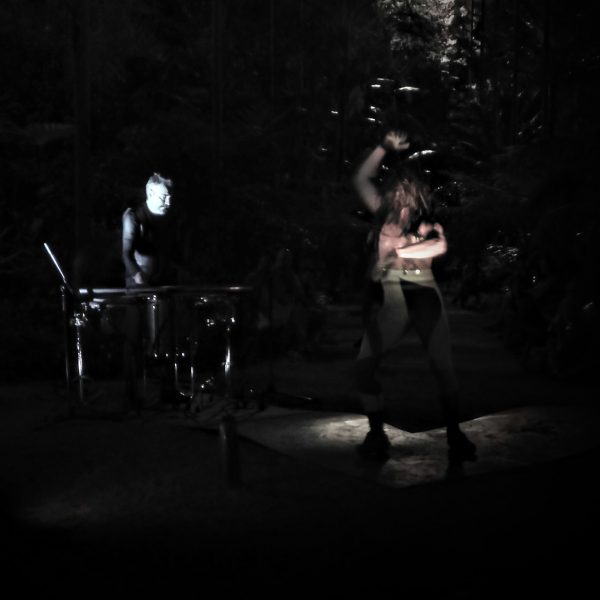
Last September 30th I repeated the experience. This time I went to Estufa Fria to watch the performance Terra Cobre, by musician and sculptor João Pais Filipe and choreographer and dancer Marco da Silva Ferreira, as part of the BoCA – Biennial of Contemporary Arts program.

It was supposed to start at 7pm, but it started 37 minutes later (an issue duly explained to the public, which shows respect for those who were there). Nobody gave up. The kindness of those who were managing the moment helped, the Estufa Fria space invites us to enjoy the space and those who were there knew that waiting to see the performance would be worth it.

Terra Cobre begins with an arm that moves, a rattle that is the extension of Marco da Silva Ferreira’s body (who from now on will just be Marco). The body is used as a percutive medium. We have strength in the dancer and subtlety in the musician. I’m sitting down absorbing the world, traditions, changes, adaptations. And it started less than 2 or 3 minutes ago.

João Pais Filipe’s (hereinafter João) percussions are perfect, with no room for error. Technique, creativity, focus, sensitivity are words that define João’s work.

I look at Marco, the rhythm, the body at the service of the will. Possession and exorcism, the antithesis between the ground floor and the ancestor. A trance that passes into our body.

Unexpectedly, a song from Marco echoes. Scenically, the voice and bodies gain another presence, there is no percussion during the singing.

The gong enters and we leave the ground floor and let ourselves be guided to the more transcendent side. Repetitive, hypnotic, pulsating. Marco returns and takes me on a trip to Caretos. I return to the traditional, I let the story get confused, change perceptions and the rattles end up hanging and silenced in the final moment.

Seeing Terra Cobre is being part of the experience that unfolds between the village and the world, between the body and the sounds. Once again João Pais Filipe does not disappoint, and Marco da Silva Ferreira is on my radar as an artist to follow.

Take a look at the Boca 2023 agenda with the program running until October 15, 2023.

  • Terra Cobre de João Pais Filipe e Marco da Silva Ferreira
Posted on

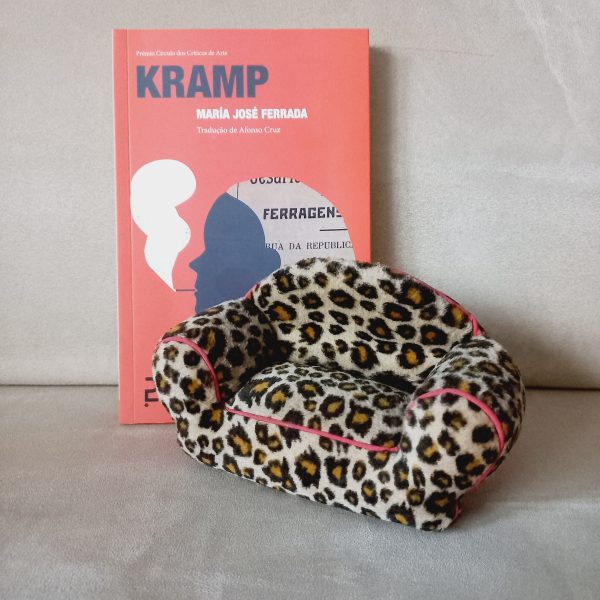
Kramp | María José Ferrada

Kramp | María José Ferrada

This book is currently at the top of my best of this year!

I read it one morning last week. I woke up at 5:30 am, indisposed and between the sleep that wouldn’t return and the silence of my house, I decided to open Kramp. I ordered it in July, but heard about it for the first time on June 3, at the Lisbon Book Fair, at the presentation of the label Questão Pentagonal. I ran a lot that day, I arrived late, but I knew it would be worth it. Antena 2 was there and you can listen to the presentation of Questão Pentagonal on the RTP website.

This label, from the Grupo Narrativa, was created by Afonso Cruz and brings us translations of unknown works, until now, in Portugal.

Anyone who knows me, knows that I really like Afonso’s writing and it’s not surprising that I was curious about what he would present to us with the Questão Pentagonal.

Kramp, by María José Ferrada and translated by Afonso Cruz, is a book that does not let us pause. Once you start reading, there’s no going back: it’s to be read straight away, even if you have to hide somewhere in your house so that no one bothers you.

D, M’s father, is a traveling salesman who believes that we can all achieve what we want. He sells Kramp nails, saws, hammers and peepholes and works with his daughter, M. They share visions, lessons and cigarettes. In chapter IV, M shows us her classification of things and, believe me, you won’t be able to stop reading.

M’s lucidity about life is incredible and the way in which this lucidity is achieved in María José Ferrada’s writing is wonderful. M has a mother and has D (who will be a father in the last pages of the book). I don’t want to spoil the reading, but these details in the writing of the book make it delicious and I will have to reread it because I feel compelled to do so by the Great Carpenter (creator of the World in M’s eyes). The way M explains the world and how it works based on Kramp products is genius.

All the characters subtly enter, with descriptions so well done that they make us want to find out more about S, F, E, C and all the others.

The life lessons that a single screw brings us, small details that we read and that turn out to be giants when we least expect it, and this crazy desire that I have to tell you every incredible sentence I read, that grabbed me, that taught me to look the other in several perspectives in this story. This book puts us in the role of mother, father, friend, child and adult. It gives us so much and so fast.

With the writing of María José Ferrada, I silently peeked through the peephole in my door and lived M’s story as if it were mine.

With this book, the author received the Art Critics Circle Award, the Best Literary Works Award from the Ministry of Culture, Arts and Heritage and the Santiago Municipal Literature Award.

What a beautiful choice, Afonso, to start the Questão Pentagonal. Next on the list to order and read is Não deixes que uma boa notícia te estrague o dia (aforismos) by Ramón Eder. I’m sure it won’t let me down.

Posted on

パ​ン​ダ​の​飼​育​日​誌de 故やす子 feat. 仮名


パ​ン​ダ​の​飼​育​日​誌
de 故やす子 feat. 仮名

Listen and/or buy on Bandcamp

Yasuko Ko (故やす子) manages in this “Panda Breeding Diary” (パンダの飼育日誌) to pull us back and forth in an act of creation that transcends us.

From Japan only good winds and excellent creators. The tracks — in which the titles are dates (March 25, July 16, October 22 and March 20) — tell us about a small odyssey between the time that insists on being late and the rush to get to the right place.

Electronics, samplers, and vocals combined over 4 tracks that will make your body move.

It’s on this trip that we meet Yasuko Ko, who calls himself Mathcore Vocaloid Producer and who presents succinctly and intensely on this MiMi record.

(Liner Notes published with the record on August 8, 2023)

Posted on

Interview with João Concha | Exhibition “Que casa sou?”

Interview with João Concha | Exhibition “Que casa sou?”

I crossed paths with João during my master’s. What does it matter? Everything and a lot!

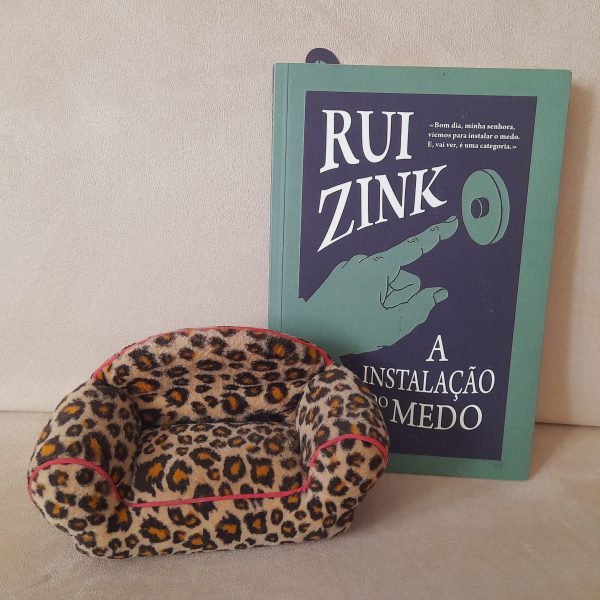
He was invited by Professor Rui Zink to introduce us to Não Edições, which I have always considered an incredible publishing house: the aesthetics, the editorial line, the vision, the apparent simplicity of all the work. The simpler it seems to us, the more complex it tends to be. João is a person with an above average sensitivity, a refined aesthetic sense and a captivating friendliness. It’s easy to create an empathetic connection with him (I say).

That class in which João was invited to talk about his work as an editor piqued my curiosity. Some time later, already during the pandemic, I interviewed him for Covidarte and I would get to know a little more about his work.

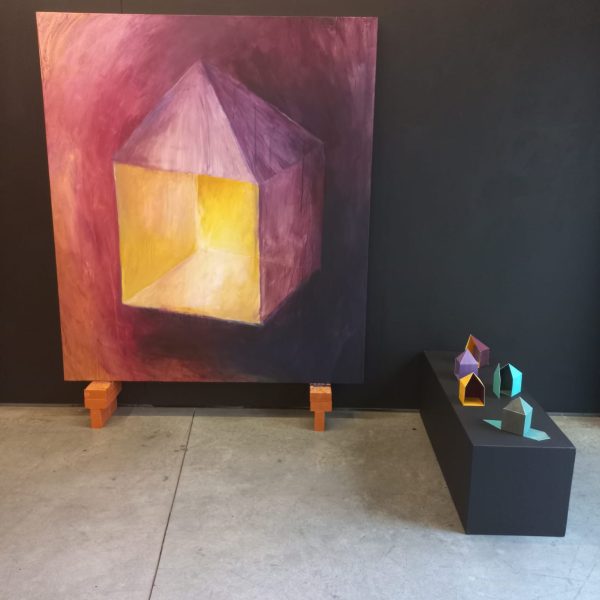
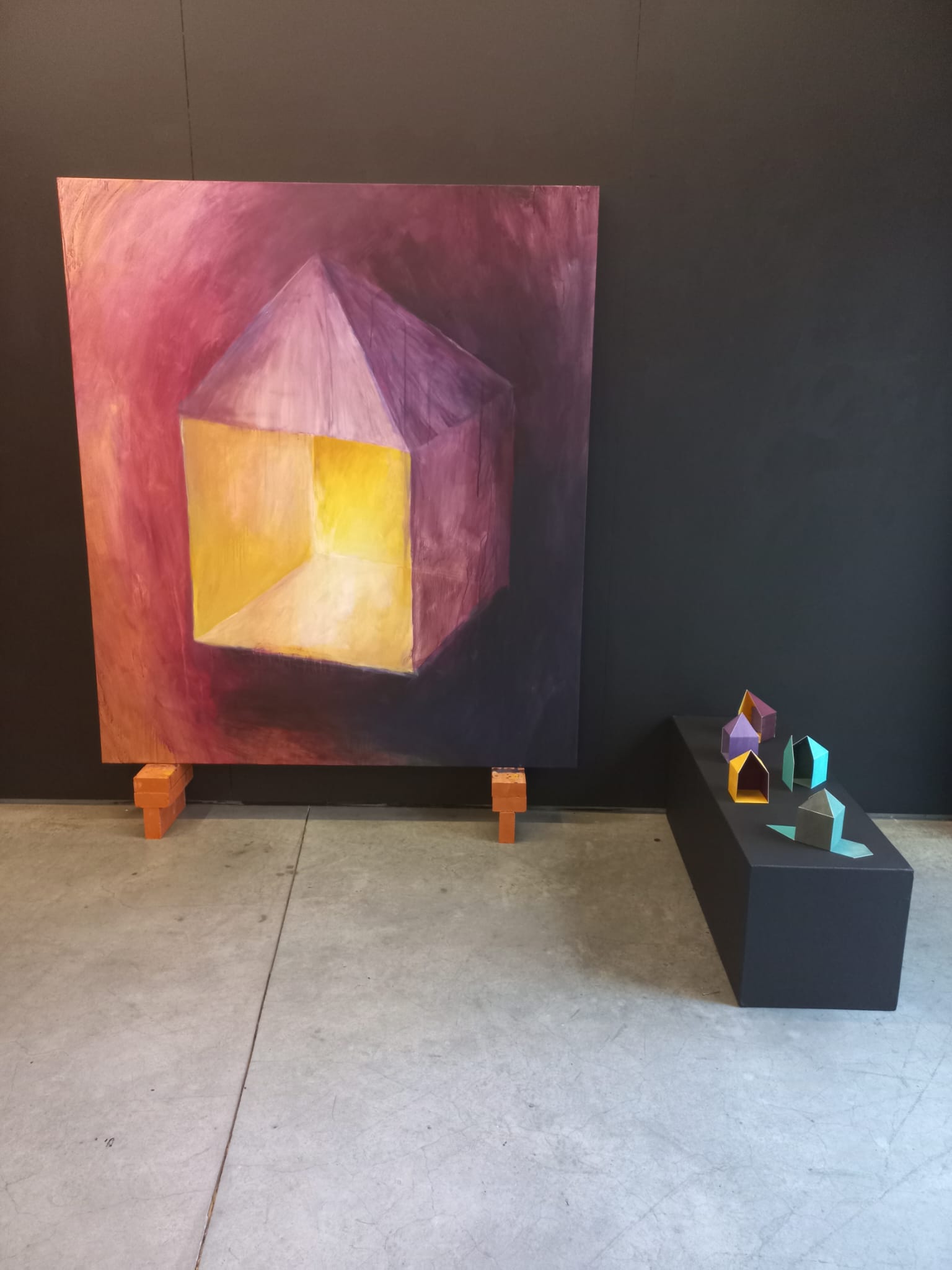
Now, in July 2023, opens the exhibition “Que casa sou?” where he brings together a series of paintings resulting from a 3-month residency. Focus, determination and vision are some of the characteristics I attribute to João.

The exhibition will be at the Casa da Cultura de Setúbal, until September 2023, and believe me, you don’t want to miss it. It feeds reflection about the space we occupy, the way we occupy it, the place of ideas, of being and of time.

Thank you, João, for accepting this interview and congratulations on the excellent exhibition!

Image Not Found

Margarida Azevedo (MA): Tell us a little about how these houses were born (from idea to design).

João Concha (JC): It is difficult to understand where certain things, motives or obsessions come from.

It seems to me that this is what happens with these houses (or non-houses) and perhaps with a large part of my plastic work. By the way, it is a thankless task for those who create, to analyze or disassemble a given research (their own), when it is also made of errors, deviations, accidents…

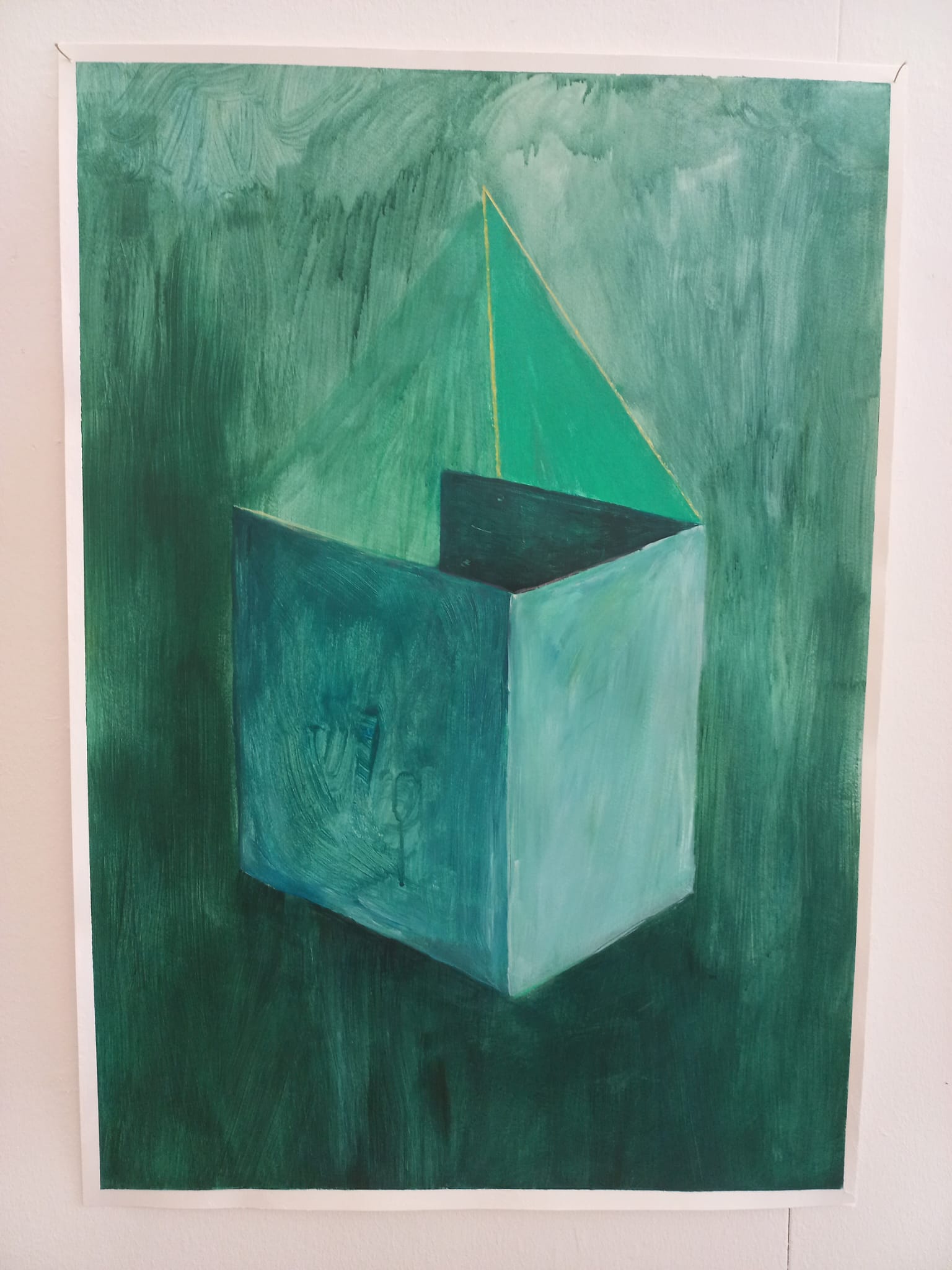
This ‘house’ archetype has been with me for years, but it was in 2013/2014 that I made the first series of works, starting with drawings in orthogonal projection to deconstruct the ‘house’ shape, as if it were an open or planned box. After this more streamlined approach and control of shapes cut out of paper, I moved on to larger paintings, in which I was already looking for something else. These works gave rise to the exhibition “Abre para Dentro”, in 2018, at the Monumental Gallery.

From 2019, a doctoral thesis and, later, the pandemic confinements made me stay at home longer than I thought. A change of house precipitated other changes and this theme of ‘house’, or rather ‘home’ became important again.

In 2021 I started drawing again and resumed the practice of a graphic diary. I think I was trying to escape the ‘verbal’ domain, in a kind of compensation for the years I spent with the thesis… which is always something overwhelming. It was a return to a visual exercise based on gesture: quick, more repetitive or more exploratory sketches multiplied. And even though I initially saw them as a means (possible studies for paintings, which I couldn’t do because I was without a studio), I realized that it didn’t make sense to hierarchize ‘process’ and ‘result’, ‘drawing’ and ‘painting’, almost inseparable. The ‘middle’ and the ‘end’ were blurred, so I agreed to exhibit these diaries and show original drawings and reproductions at Fabrica Features Lisboa, in 2022. After all, in an exhibition I always share a process, a concrete phase of the path I’m on. And that exhibition was seen by José Teófilo Duarte, who invited me to present work at the Casa da Cultura, at the time without a set date.

In 2023, since April, I had the opportunity to do an artistic residency at Duplex | air and having time/space, among other practical conditions, to think and work on the topic. At Duplex I also found a ‘house’, already inhabited by permanent or passing artists. It is from this very intense period that are the works now shown in “Que casa sou?” and in which I am interested in radicalizing the value of gesture and color, in order to touch a more subjective notion of ‘home’ as an emotional space or place.

MA: While we were talking at the inauguration, you mentioned houses and their importance in second childhood. Can you give us your view on the importance of drawing and painting in childhood?

JC: In fact, I think we were talking (also with Ana Nogueira) about how the figure of the ‘house’ is the second visual representation that many children make. There is the first, the face, which is a circle with figurative elements, and then the house, a square or rectangle to which a triangle is added. Details vary, but this archetype is expressed from childhood: a recognizable and, in principle, safe place. Although shadows and contradictions also inhabit it, and that goes through the works you’ve seen, I believe. And the spatial memory of the houses I lived in, in childhood and throughout my life, is the basis of these drawings or paintings (I no longer distinguish them, in this case).

Drawing is a form of expression that I remember forever. Even for phases I don’t remember very well, there are drawings that my parents kept and that today I look at with surprise (as if they weren’t mine). They are long before I learned to write. I don’t want to get into the issue of the importance of drawing in childhood, because I’m not an expert on the subject, but I can say that for me drawing was just as or more natural than talking, playing… it was also, or above all, a way of playing. For an only child, shy but curious, the borders between the real and the imaginary were not very evident [laughs]. And drawing was and is, for me, linked to pleasure. Playful materialization and exteriorization of the body and from it, a “hand thought”.

Now, reversing the relationship of importance that you suggested between drawing and childhood, I would say that a certain look or experience of the world and one’s own body as a ‘child’ (I’m thinking of astonishment, curiosity) is essential for drawing or even for painting, as I see and practice them. And then I remember several artists who spoke, in some way, about it, from Klee to Picasso, and who worked on it, but also poets, like Manoel de Barros…

MA: Your works are very plastically expressive. How do you use gesture as a form of expression?

JC: I was just talking about gesture, yes, and in drawing it is what sometimes decides and defines. I don’t know if I can answer your question, because it depends a lot on each project. There is perhaps an experimental and not always controlled side, in which I deal with imperfection (the error, the unfinished, the overlapping of several gestures), at least in some of the things I have exposed. It implies being open to what happens with the material itself, whether with the support or with the paints and other materials I use to draw: crayons, oil pastels. I use line a lot, even in paintings, but each work is different and I hope it reveals something of the process itself… I’m not particularly interested in hiding it… or leaving the result clean.

MA: You have an upside down house. What message do you intend to convey with this “box”?

JC: I have doubts about “passing messages”, that is, about the need to ‘communicate’ in artistic work. I do not try to use a language that unequivocally makes a supposed exchange between the producer and the viewer, the transmitter-receiver genre.

There are images that I’m not sure where they come from, although I can suspect or reflect on it, of course. But mystery has its place. And I prefer to leave blank space for those who see it; I am very interested in these other reading possibilities…

It is necessary to believe in the “powers of painting” (I am thinking of José Gil), given that, as an artist or viewer, I am more interested in these synesthetic ‘powers’ (which come from a physical, face-to-face and ‘open-ended’ experience of the work) than the eventual informative qualities of art. Reflection can be raised without a clear or verbalizable message, based on fruition: the visual and the pictorial, the symbolic and not only that, but without a prior agenda.

Even when giving a title to a work or an exhibition, like this one, I prefer the open field and the question (a question mark) to the declarative register. There are too many subtitles in the world.

Image Not Found

MA: In addition to the paintings, you have some models of houses. Houses that open in different directions and that give us different ideas. Why these models?

JC: I always had some difficulty with three-dimensionality, with the modeling of shapes, but I was encouraged by an artist friend [Maria João Lopes Fernandes] to risk this exercise, and later also during the residency itself [Susana Rocha, artistic director of Duplex | air].

I saw the paper models as studies for the drawings/paintings, do you believe that? As a way of exploring the spatial simplicity of these ‘non-houses’ and their variations, more accessible or more inaccessible, more open or more closed, looking for contradictory signs… the visible and the invisible, for example.

At first, I didn’t think to expose these very precarious constructions, on painted paper, but during the assembly I thought it would make sense in the specific context where they are, next to that larger canvas, in a darker room, etc.

While I was painting, still at Duplex, I took a series of photographs with my cell phone, for my record. Interestingly, when I downloaded the images I thought there was something else there… something ghostly… the images and the digital completely transformed the interior environment of those models. They ended up giving rise to a brief series with which I collaborated under the rubric “Spectrographies” of the GHOST project — Espectralidade: Literatura e Artes (Portugal and Brazil) [IELT — FCSH-UNL].

Image Not Found

MA: You always have a very well defined aesthetic line in your work. How do you connect your exhibition with your work in design, editing, etc.?

JC: To be honest, I think there’s little relationship between the work shown in the exhibition and other works I’m also involved in, such as editing. I even think that with this set of drawings/paintings I try to escape from the ‘project focus’, in favor of a more uncompromised experimentation…

Coherence between different modes of expression is sometimes overvalued. For me, at least, that’s not a goal or something to worry about.

Image Not Found

MA: You don’t put your signature in your pieces (at least in a visible way). Do you have any specific reason not to do it?

JC: Visually the signature disturbs me, one more sign there…

Image Not Found

MA: Do you have more exhibitions planned? What’s new soon?

JC: For now, and in the near future, I hope to be able to continue this interior/exterior dialogue, in paintings such as the larger ones in the exhibition. It’s like going into those spaces and painting the inside, this time. I’m working on it, but still slowly and without any expected exhibition. When I exhibit, more than closing a phase or a series, I reflect on the moment in which I find myself; it is one more way of being able to continue, that is, to ask new questions.

Thank you, João, and much success!

Posted on

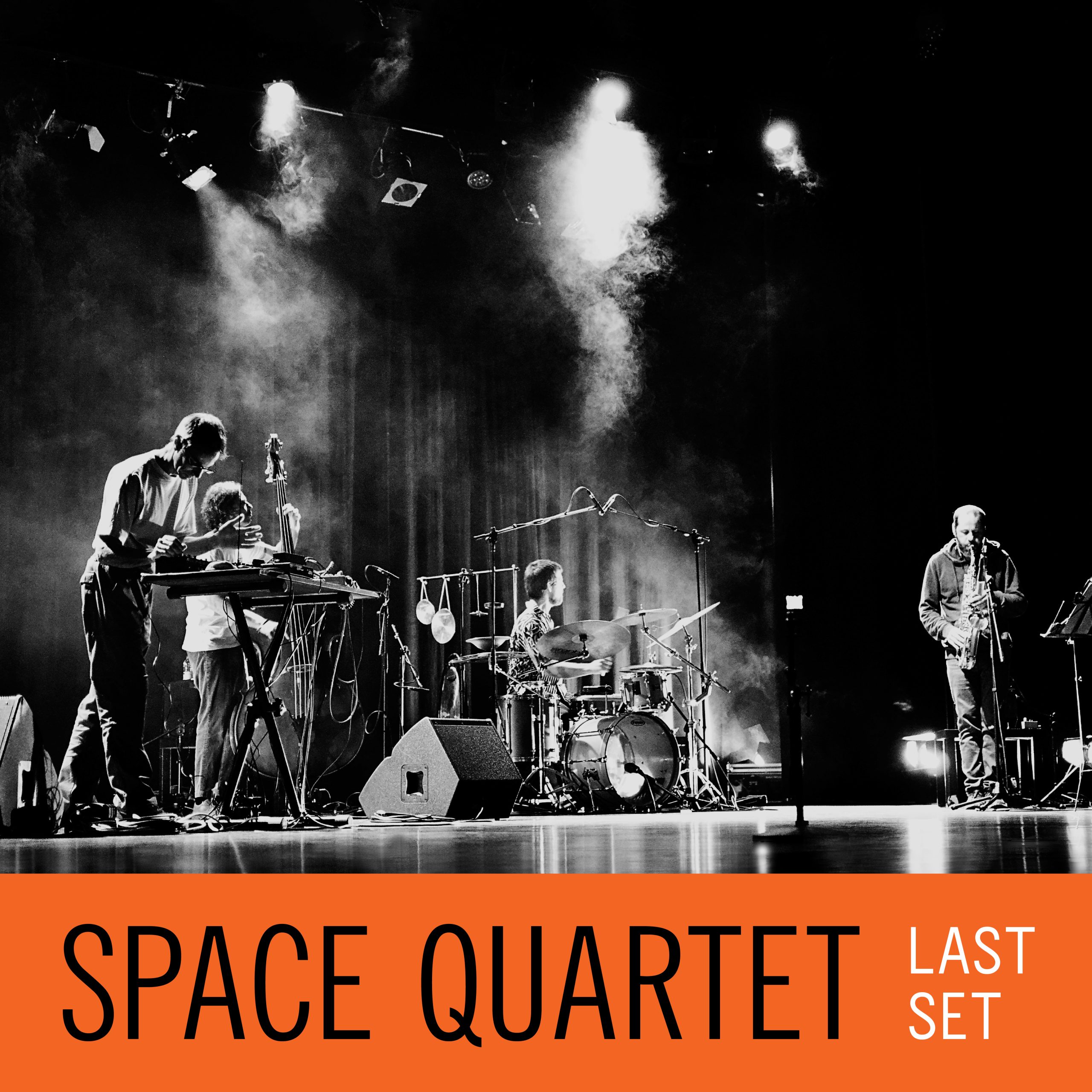
Space Quartet | Last Set

Space Quartet | Last Set

You can listen and buy the record on Rafael Toral’s bandcamp page.

In a review of one of Rafael Toral’s records, I wrote that I always missed his live concerts. This one couldn’t fail!
I saw this quartet at Out.Fest, on June 3, 2021, and wrote about the concert. Writing about this record is reliving the moment, with the necessary distance to listen to it more carefully, go into detail and re-enter the world of Rafael Toral. Listening to the record gives me the freedom to go back and forth, to capture that moment when Nuno Morão made an important detail that I had missed live. Yes, believe that Nuno Morão playing live has these things. He dialogues so well that only on the records I realize absolutely incredible things. One of the drummers I most enjoy listening live in the improvisation scene.

This quartet has its own energy and Toral has a lot of weight in this matter. To enter their world is to allow our head to embark on a complex journey, with different languages ​​that we don’t always master. It’s learning about expansion and containment, fluidity and resistance.

I’m starting to listen and I’d be lying if I said I didn’t look forward to the entry of Rafael Toral’s electronics. The conversation between the double bass and the saxophone opens the record and we slowly begin to let ourselves be led. I remain very attentive to Hugo Antunes’ double bass, but today I pay more attention to details of Nuno Torres’ saxophone. Nuno Morão unites moments, interconnects stations we pass through on this record’s journey.

The trip lasts 1 hour and takes me to places I didn’t go to in the live concert. Between the ground floor and space, we never sat down waiting for the next transport. On Toral’s records there is always a story of parallel universes, different dimensions, realities that intersect and interconnect.

On this record the common thread is clear, the dialogue between the 4 musicians is fluid and there is no moment in which they get lost and fail to keep up the conversation.

A very close person told me a few years ago: “Don’t want to get to the end result right away, learn to enjoy the process”. Between the live concert and this record, 2 years passed. Now I hear it differently, with the right distance, and it continues to enter my ears with the same delicacy and beauty. It’s like I just sat in that auditorium on June 3, 2021.

Posted on

The Selva | Causa Efeito Festival

The Selva | Causa Efeito Festival

Festival Causa Efeito | June 30, 2023 | Text that includes real facts and a short story I wrote while listening to the concert | Photos by Nuno Martins

It is always intimate and wrapped in moments of redemption. Ricardo Jacinto, Nuno Morão and Gonçalo Almeida are three reference musicians in national improvisation. The Selva practice a complex and incredible exercise of restraint that dissolves over the course of a story that binds us to the concert. To the here and now.
It’s hard to stop the mind. They lead me to memories hidden between notes that insist on squeezing my chest. It’s really hard not to be absorbed by the magnitude of Ricardo Jacinto’s cello.

***
I try to stick to writing what I see and feel, but stories, ideas come to mind and the pen begins to slide uncontrollably across the paper. Here we go to the tale.

When I remember looking at the blank of a possible suicide note, I am sure that the decision I made was the right one. The emptiness of a pen without ink. Perhaps because I repeatedly and rhythmically made the same movement.

Lower your head. Slightly rotate it to the left side.

Even the exhaustion of the bow, the disobedience of the drumstick, the fatigue of someone strumming steel strings.
The emptiness of a suicide note.

***
I remain focused on Nuno Morão. Maybe because it brought me back to the ground floor.

***
After all, maybe you like to walk here. Between hot notes, despite the eagerness of other times. I like to torment myself with robust memories of lost hands on plump thighs.

***
The Selva’s crescendo of intensity is always delicious.

***
Wet lips in a glass of rum. Today, it’s actually tequila.
The emptiness of an unwritten suicide note. Have you ever read your suicide note? Laugh at what? Laugh because you didn’t make it. Sad what lives in the silence of unwritten letters, sentences that remain in suspense.
I suspend myself. I look at myself from the outside. What a sad figure.

***
Now I’m with Gonçalo Almeida. A heavier side, but full of subtlety.

***
Run over gravel before entering a long, unexpected tunnel. The suicide note remains in the void. Scream without much success. The neighbor hammers incessantly on the wall next to my bedroom wall.
Bastard. Postpone the suicide note for me. What a chasing bitch.
Ideas in a rush. And the note that doesn’t come out. You told me it would be easy, that you just wanted to. But what about the note that doesn’t come out.

I can only continue with my feet nailed in the gravel, inside the tunnel, in the emptiness of a possible suicide note. I have ink in the pen again. I ran out of paper.
The emptiness of wanting to write a suicide note.

This emptiness will never end. I got paper again. I ran out of ink in the pen.

  • Foto de Nuno Martins | The Selva | Festival Causa Efeito
Posted on

I blurted out the words. A text in memory of Juva Batella.

I blurted out the words. A text in memory of Juva Batella.

In April 2022 be speechless. I think I got them back this year. Only now do I know exactly what I want to say and how I want to say it. I wanted life to cross paths with Juva during the pandemic. The hand that led me to him was Rosane Nunes, founder of Editora Raíz, currently Cambucá.

Rosane invited me to write a short story for the collection Conto em Casa. I accepted immediately without knowing very well what to expect from me. I was going through a complicated period. The pandemic, the anxiety, the fear, the self-pressure of keeping Covidarte running, the master’s degree, motherhood… All of this closed at home, afraid of a still very unknown virus and with emotions on the surface.

Juva would be a breath of good energy that would come through my window. But that I still didn’t know. Rosane tells me that she would like me to present Juva’s short story, O espaço do meu tempo, in a live broadcast and he would present my A Caixa da Pandora. Once again I didn’t hesitate, but the weight of responsibility settled in.

I immediately started researching Juva, reading his texts, and I felt small.

We arranged a session for the two of us to get to know each other, talk about ourselves, tell our stories, share the good and the bad. The times of storm and sunny days of those who write. The romantic image of what we do. “What’s up, Daisy!” Thus began our video call. It was November 2020, he was wearing a t-shirt in Brazil and I was wearing a hat in Portugal.

“Can you believe I haven’t smelled anything since I had Covid? Not even the stinkiest garbage.” Talking to him was so easy. The trifles and the more robust themes had the same intensity in our conversation. “I went to see your website. I read what you write. I have questions for you.”
My heart was racing. “I like what you write. In the raw way you write”. Read me my texts. It took me by surprise. “Your writing reminds me of Lydia Davis short stories. Do you know? I answered no. “You have to read. You will identify yourself.”

Times later I ordered it, read it, and he was right.

On November 16, 2020 we laughed together live. “I wanted to start with a brief narrative/a mini story/a poetic text (…) by Margarida, which bothered me a lot. In the most potent sense of the word”.

“I lost confidence.
I became suspicious of who I was. Whose I was.
Isolated, I lost my definition.
I broke away from the routine I knew until then.
I confined myself to taking one day at a time. No plans, no ambitions.
I became suspicious of who I was.
And so it will be until I can once again confine myself to a life I know backwards and forwards.”

Juva don’t know what this moment meant to me. Maybe because I never told you. In November 2020 Juva brought me confidence, good energy, smiles and friendship. Later, in February 2021, we met in person in Portugal. I told him I’d like to write something with him. Never happened. In 2022 I was surprised by the message of his death. I didn’t know what to say. Maybe because I always think we’ll have more time with each other. Maybe because I always leave so many messages to send and so many things to say to those I like, to those who cross paths with me and always add something more.

Juva had an energy of its own. A way of encouraging me that still didn’t make sense.
As for you, Rosane, I don’t want to leave anything unsaid. In life! Thank you for crossing my path with Juva’s. Thank you for entrusting me with the interview with this man I didn’t know. Thank you for being in Portugal, laughing together and believing in my work.

To you, Juva. More than a year after your death, the words came back to me. I can thank you for looking at my texts. Your entry into my world. Words have their time. The time it took me to digest the emotions. It took me a while, but it’s out there. I disconfined the words and I know you would like to read them.

Posted on

Fixation Trio (André Hencleeday, Hernâni Faustino e Felice Furioso)

Fixation Trio (André Hencleeday, Hernâni Faustino e Felice Furioso)

SMUP, May 11, 2023, 9:30 pm

I could tell you here the eloquence of my days. There is absolutely nothing different. In fact, everything changed naturally.

The storm over the leafy orange trees. Times change, carpets change. Rebellious breezes stir in memories. My face muscles ache, around my lips, which were once succulent. I could tell you that over time I didn’t notice anything.

I sat quietly watching the seagulls agitated by the sea. The storm left the orange trees and took over the dune where I stayed.

Thorns in the feet, sharp mind.
Purge. It seems like the right word.

Purging old, accumulated, enraged secretions. I could tell you that the shaking of your hands on me makes me run to the bottom of the well of memories.

That ginger and lime flavor, the smell I have of you. Sandalwood notes that suffocate me like a black bag over my head.

Sometimes when you are silent, sometimes when you insist on keeping your hand closed over my mouth. We have something in common.

The empty tunnel that fills with drama. One or two slaps later it goes away. Slaps given with the back of the hand. Between 2 maritime pine trunks. Nailed in the brambles that burrow into my white skin.

Dye me red. Small rivers that run hot through my body. I like this feeling. Chests erect in the cold, hot blood flowing, bare feet stained by the wet earth.

I feel a shiver that runs through me from my feet to my buttocks. You laugh as you caress my belly and lick my neck, hard.

I hear whispers in the distance. We remain stuck in the brambles. From the viewpoint I see the seagulls while you remain uncontrollable. You pour out what is in you too much.

I contemplate and let the warm guide me to you. Ginger and lime between my lips. Between my breasts. We enter a vicious cycle.

me in you

you in me

There is no better dance than one in which one foot is drastically stepped on. Pain subtly merges with pleasure.

I wake up wet. I scream with my fingers inside me. Lying down, I look up. The orange tree filters the sun that hits my face.

This is how it is purged.

This is how it is purged.